












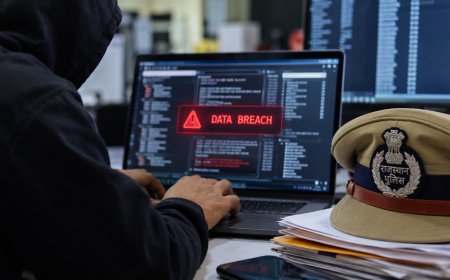




























Hawala and Money Laundering: New Global Concerns
FATF highlights the growing use of hawala and underground banking by organised money-laundering networks using traditional methods and modern technology.

What is Hawala?
Hawala is an informal system of transferring money or value without depending completely on traditional banks. It has been used for many years in different parts of the world, including for legitimate remittances and money transfers.
In a typical hawala system, a person gives money to an intermediary in one location, while another intermediary provides the equivalent value to the intended recipient somewhere else. The settlement between intermediaries may happen separately.
Hawala itself is not automatically illegal. The concern arises when criminals misuse these networks to move or hide money connected with illegal activities.
Hawala and Money Laundering
Criminal groups may use underground financial networks because they can make it more difficult to follow the complete money trail. Illegal money may be connected to fraud, cybercrime, drug trafficking, corruption, illegal gambling or organised crime.
Professional money-laundering networks can provide services to criminals by moving funds between people, businesses and countries. This can make investigations more difficult because authorities may need to trace several transactions before identifying the original source of the money.
Technology is Changing Financial Crime
Technology has made financial transactions faster and easier. Digital banking, online wallets, instant-payment systems and messaging platforms are now part of everyday life.
However, these same technologies can also be misused by criminals. The FATF has highlighted the increasing use of technology in underground banking and what it describes as “digital hawala.”
Digital tools can allow financial networks to communicate quickly and operate across borders. This creates new challenges for investigators.
It is important to remember that digital payments themselves are not illegal. The challenge is identifying when legitimate financial services are being used to support criminal activity.
India’s Efforts Against Money Laundering
India continues to investigate suspected money laundering and financial crimes through agencies such as the Enforcement Directorate (ED).
On September 7, 2026, the ED conducted searches at seven locations in Delhi, Kolkata and Ranchi as part of a money-laundering investigation involving Akhbar-E-Mashriq Pvt Ltd and TMC Rajya Sabha MP Mohd Nadimul Haque.
The reported investigation concerns alleged financial irregularities and suspicious transactions. These allegations remain part of an ongoing investigation and should not be considered proven unless established by a competent authority or court.
The case should also not be called a confirmed hawala case without evidence showing a direct connection.
Why International Cooperation Matters
Money laundering can easily cross national borders. Illegal funds generated in one country may be moved through several other countries before being used or invested.
For this reason, cooperation between governments, banks, financial institutions and law-enforcement agencies is extremely important.
The FATF works with countries around the world to strengthen systems designed to prevent money laundering and other financial crimes. Its latest findings highlight the need for authorities to understand how traditional underground banking is increasingly connecting with modern technology.
What Can Be Done?
Better monitoring of suspicious financial activity can help identify illegal money transfers. Banks and financial institutions have an important role in detecting unusual transactions and reporting suspicious activity as required by law.
Technology can also help investigators analyse large amounts of financial data and identify unusual patterns.
At the same time, legitimate financial activity must be protected. Not every unusual transaction is illegal, and hawala should not automatically be treated as criminal activity.
Conclusion
Hawala has been used for legitimate money transfers for many years, but its misuse can create serious challenges for financial authorities.
The latest FATF findings show that money laundering networks are becoming more organised and are adapting to new technology. As financial systems become increasingly digital and connected, criminals are finding new ways to move and hide illegal funds.
Stronger financial monitoring, international cooperation, better technology and public awareness can help authorities fight these activities more effectively.
The fight against money laundering is constantly changing, and keeping the financial system safe will require continued cooperation between countries, financial institutions and law-enforcement agencies.
Disclaimer
This article is intended for informational and news-reporting purposes only. The information is based on publicly available reports and sources available at the time of publication. Allegations mentioned in the article should not be considered as proven facts unless established by a competent authority or court. BizGossips.com and the author do not intend to make any accusation or harm the reputation of any individual or organisation.
By Saumya Sharma
Content Creator, BizGossips.com
What's Your Reaction?
 Like
0
 Dislike
0
 Love
0
 Funny
0
 Angry
0
 Sad
0
 Wow
0