
































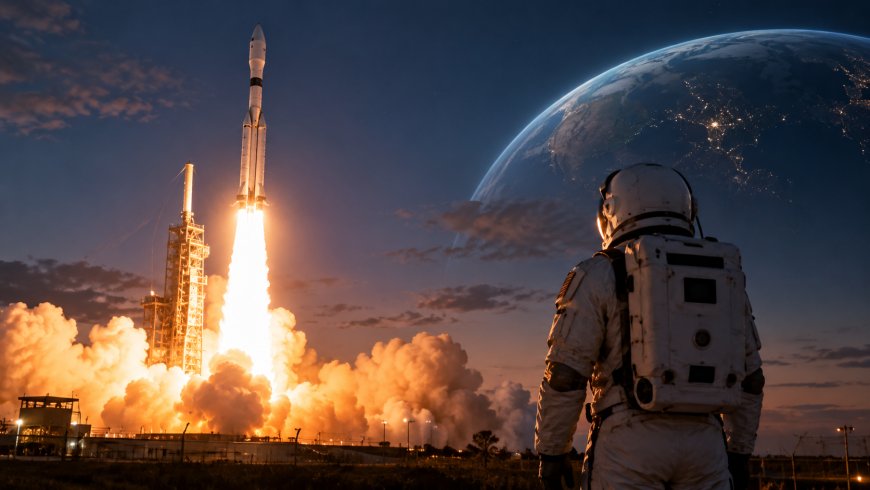
World Space Week 2026: Who Really Gets to Go to Space?
World Space Week 2026 celebrates humanity’s rocket revolution, but space travel remains dominated by a few nations, with women still heavily underrepresented.
By Shefali Rana | BizGossips.in
World Space Week 2026 is celebrating a “Rocket Revolution”, but the numbers behind humanity's journey beyond Earth raise a less comfortable question:
Are we actually making space more accessible—or simply making it available to those with the money and technology to reach it?
Observed from October 4 to 10, World Space Week commemorates two milestones that changed the course of space exploration: the 1957 launch of Sputnik 1, the first artificial satellite, and the 1967 entry into force of the Outer Space Treaty.
The United Nations established the annual observance in 1999 to highlight the contribution of space science and technology to humanity.
Nearly seven decades after Sputnik, however, the space race looks very different.
746 People Have Crossed the Karman Line
According to Al Jazeera's 2026 analysis, at least 746 people from 52 countries have crossed the Karman line, including professional astronauts and paying space tourists.
The headline number sounds impressive.
The distribution is not nearly as equal.
The United States accounts for 369 people, while the Soviet Union and Russia together account for 138. China, which became the third country to independently launch humans using its own rockets, has sent 29 people.
That tells a broader story about who has historically had the resources, technology, and infrastructure required to reach space.
Space may be becoming more commercial.
It is still far from evenly distributed.
Women Remain a Small Minority
The gender gap is even more striking.
Only 112 of the 746 people who have travelled to space—roughly 15%—have been women.
The first was Valentina Tereshkova, who travelled to space in 1963.
The United States did not send its first woman, Sally Ride, until 1983.
Commercial spaceflight has started changing the numbers, but it has also exposed another contradiction.
More than half of the women who have flown since 2020 reportedly travelled as paying passengers or guests on Blue Origin's suborbital flights.
That means greater access is possible.
But it also raises a question about what “access” actually means when reaching space depends heavily on the ability to pay.
The Rocket Revolution Is Real
The technology behind the current space boom is changing rapidly.
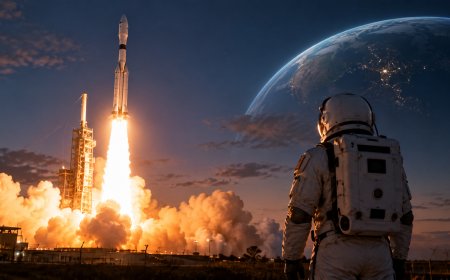
Reusable rockets, commercial launch companies and new launch vehicles are reshaping the economics of spaceflight.
Reusable hardware can reduce the cost of launching payloads, while smaller launch vehicles are creating additional options for organisations seeking to place satellites into orbit.
That matters because satellites are no longer simply symbols of national prestige.
They support communications, navigation, weather forecasting, Earth observation, disaster response and connectivity.
The commercial space economy is therefore becoming increasingly important on Earth, even for people who will never personally travel beyond it.
Humanity Is Preparing for the Next Moon Race
Human spaceflight is also moving into another phase.
NASA's Artemis II crew flew around the Moon in April 2026, travelling approximately 406,771 kilometres from Earth and surpassing the distance record set during Apollo 13.
NASA plans Artemis III for 2027, while Artemis IV is targeted for 2028 and is intended to support a crewed lunar landing near the Moon's south polar region.
China has also announced plans to land astronauts on the Moon around 2030.
India is preparing for another important milestone.
The country is targeting its first crewed Gaganyaan mission in 2027, which would make India the fourth country to independently launch humans into space using its own rocket.
The next phase of space exploration is therefore becoming increasingly competitive—and increasingly commercial.
But Who Actually Benefits?
This is where the “Rocket Revolution” becomes more complicated.
Cheaper launches can make space more accessible to universities, startups, research organisations and smaller countries.
Reusable rockets can lower costs.
Commercial launch companies can expand capacity.
But access still depends on capital, technical expertise, infrastructure and national investment.
The same technology that lowers the cost of entering space does not automatically make spaceflight affordable for everyone.
And while 746 people crossing the Karman line is an extraordinary achievement, it is also a reminder of how small that number remains compared with the global population.
The Real Meaning of World Space Week 2026
World Space Week is ultimately about more than rockets.
The technologies developed for space increasingly influence everyday life on Earth—from satellite communications and navigation to weather forecasting and disaster management.
But the next stage of the space industry will force humanity to confront a different question.
Who gets to participate in the future it is creating?
The “Rocket Revolution” could bring cheaper launches, more satellites, more scientific missions, and eventually more human beings beyond Earth.
But if access remains concentrated among a handful of countries and wealthy individuals, the space economy may become more commercial without becoming truly inclusive.
Humanity has already made space more reachable.
The next challenge may be making it more equal.
Disclaimer: This article is for informational and editorial purposes only. Spaceflight plans, launch schedules, and mission targets can change due to technical, regulatory, financial, or operational factors. Figures regarding human spaceflight are based on reported 2026 analysis and may be updated as new missions take place.
What's Your Reaction?
 Like
0
 Dislike
0
 Love
0
 Funny
0
 Angry
0
 Sad
0
 Wow
0