






































Microsoft Offers Buyouts to 60,000 Staff Amid AI Spending
Microsoft offers voluntary buyouts to 60,000 eligible employees as AI spending surges. Is the technology boom creating uncertainty for workers?
By Shefali Rana | BizGossips.in
Microsoft is investing billions in artificial intelligence, but its latest workforce decision raises an uncomfortable question: Is the AI revolution creating new opportunities, or forcing employees to make room for a different corporate future?
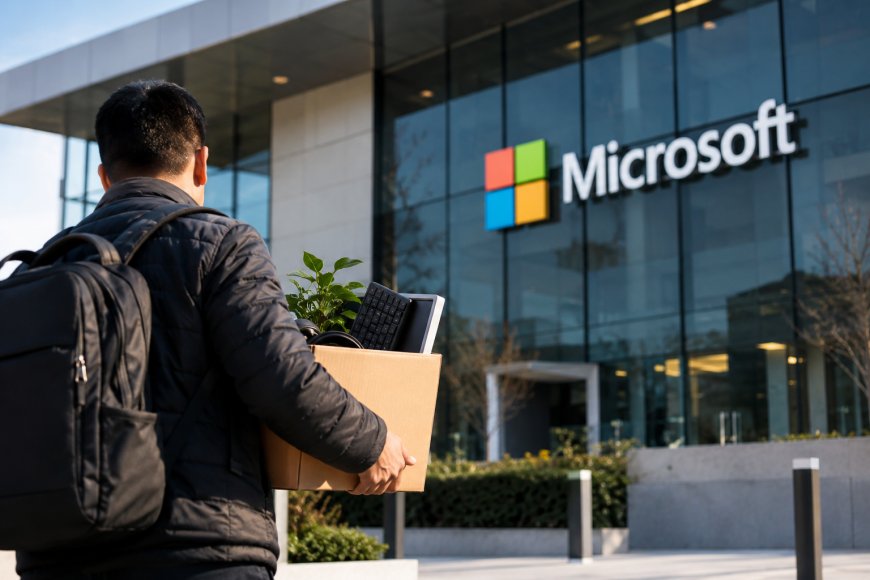
On October 26, 2026, Microsoft announced a voluntary exit programme that could make approximately 60,000 employees eligible for buyouts across the United States, Canada, the United Kingdom and India. The move comes as the technology giant ramps up AI infrastructure spending and looks to manage costs.
But there is an important distinction: 60,000 employees are eligible to receive the offer, not necessarily expected to leave. The programme is voluntary, and the number of employees who accept remains uncertain.
Microsoft’s AI Ambitions Come With a Workforce Question
Microsoft had approximately 223,000 full-time employees globally as of June 30, 2026. That means roughly 27% of its workforce could be eligible for the latest offer, making it a significant workforce adjustment.
The programme covers selected teams and employees at internal level 70 and below, including some senior leaders. Reported participating areas include AI experiences, Copilot, finance, human resources, Xbox and Windows + Devices. Certain teams, including parts of sales, marketing and security, are excluded. Eligibility depends on the employee’s organisation and the programme’s specific terms.
Microsoft Chief People Officer Amy Coleman described the offer as an opportunity for eligible employees considering a future outside the company to make that transition with support. It also gives participating business units another way to adjust their workforces to changing requirements.
Yet the bigger question remains: when a company changes its priorities so dramatically, how secure can employees feel about their careers?
$175 Billion for AI, But What About Employees?
Microsoft has forecast approximately $175 billion in capital expenditure for calendar year 2026, reflecting the enormous investment required to build AI infrastructure, including data centres and computing capacity.
The company is competing in an AI market where access to computing power and infrastructure has become increasingly important. But building and operating that infrastructure requires substantial capital, while investors expect businesses to demonstrate that their spending can generate sustainable returns.
This is where the controversy begins.
Companies may describe workforce restructuring as a way to simplify operations and adapt to new priorities. Employees, however, may experience the same decisions with uncertainty about their careers, financial security and long-term prospects.
Still, the buyout offer alone does not prove that AI has directly replaced 60,000 Microsoft employees. The programme is also connected to cost management and organisational restructuring. The precise relationship between AI adoption and individual workforce decisions remains a separate question.
Voluntary Buyouts vs Layoffs: What Is the Difference?
The distinction matters because a voluntary buyout is not the same as a compulsory layoff.
-
Voluntary buyout: Eligible employees can choose to leave in exchange for a severance package and other applicable benefits.
-
Layoff: An employer terminates roles or employment, potentially without employees choosing to leave.
-
Workforce restructuring: A broader process that may involve voluntary exits, job cuts, internal transfers and changes to team responsibilities.
Microsoft’s latest programme offers eligible workers a choice, although the financial terms and consequences of leaving will vary by employee and location. The company has not announced that all 60,000 eligible employees must exit.
For workers, the decision involves weighing the package against their financial needs, career prospects, and the opportunities available inside and outside the company.
Should Employees Accept the Exit Offer?
A voluntary buyout can provide financial support and time to explore other opportunities. But leaving a major technology company is not a decision employees should make simply because an exit package appears attractive.
Before accepting, employees should carefully evaluate:
-
Severance terms: The payment, applicable benefits, and any conditions attached to the offer.
-
Financial readiness: Savings, household expenses, debt obligations, and the time required to find another job.
-
Career prospects: Demand for their skills and opportunities in other companies or industries.
-
Internal options: Whether suitable roles, retraining, or career changes are available within Microsoft.
Employees should review their individual offer and applicable local employment rules. They should not assume that declining a voluntary buyout automatically means they will be laid off.
A Bigger Warning for the Technology Industry
The latest programme follows earlier workforce changes at Microsoft, including a voluntary retirement offer and job cuts affecting its Xbox gaming business. The company is therefore adjusting its workforce while continuing to invest heavily in AI.
Microsoft is not alone in facing the challenge of balancing expensive AI infrastructure with financial discipline. Across the technology sector, businesses must decide which skills and teams they need as their products, services and operating models evolve.
That shift could create new opportunities in AI engineering, cloud infrastructure and related fields. It may also put pressure on some existing roles as companies reorganise their operations.
The challenge is ensuring that investment in new technology translates into sustainable business growth while workers have realistic opportunities to adapt.
The BizGossips Take
Microsoft’s buyout programme highlights the tension at the centre of the AI boom: companies are spending heavily to shape the future, while reconsidering the workforce needed to deliver it.
For Microsoft, the financial question is whether its AI investments will generate returns that justify the cost. For employees, the immediate concern is what these changing priorities mean for their jobs, skills, and financial security.
The bottom line: The offer does not mean 60,000 employees will lose their jobs, but its scale shows how significantly Microsoft is reassessing its workforce. The real test of the AI boom will not simply be how advanced the technology becomes. It will also be whether businesses can turn that progress into sustainable growth while helping workers navigate the transition.
Disclaimer: This article is for informational purposes only and is based on published media reports. Eligibility, severance terms, and participation in Microsoft’s voluntary exit programme depend on the applicable offer and individual circumstances.
What's Your Reaction?
 Like
0
 Dislike
0
 Love
0
 Funny
0
 Angry
0
 Sad
0
 Wow
0