



































Europe Gas Crisis: Is EU Ready for Winter 2026?
Europe enters winter with gas storage around 71% full, but LNG competition, geopolitical tensions and higher prices raise fresh energy security concerns.
By Shefali Rana | BizGossips.in
Europe is heading into winter with a gas situation that looks manageable on paper—but increasingly complicated beneath the surface.
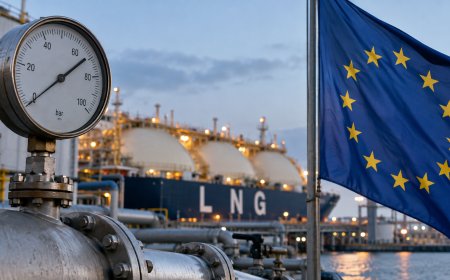
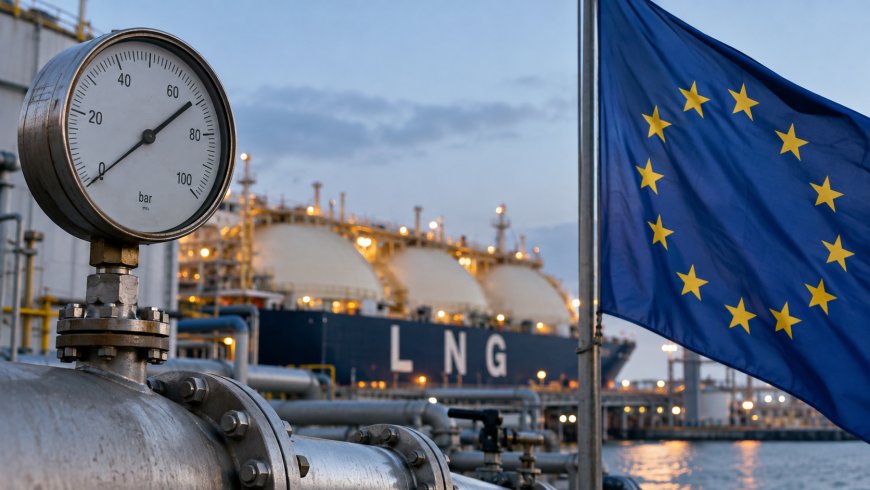
EU gas storage facilities are around 71% full, providing a substantial buffer ahead of the colder months. Yet storage levels remain below historical norms, while Europe is becoming increasingly dependent on a global LNG market where Asian buyers and other importers are competing for the same cargoes.
That creates a bigger question for Europe: Is the continent facing a gas shortage—or a gas affordability problem?
The distinction could matter just as much as the physical availability of fuel.
Europe’s Gas Strategy Has Changed
Europe's energy equation has changed dramatically since the disruption of Russian pipeline gas supplies following Russia's invasion of Ukraine.
The bloc has increasingly relied on liquefied natural gas (LNG) imported from global markets. This has reduced dependence on Russian pipeline supplies, but it has also exposed European consumers and industries to international LNG prices, shipping costs and geopolitical disruptions.
Instead of relying primarily on long-term pipeline flows, Europe now has to compete for cargoes that can move between regions depending on where prices and demand are strongest.
That means diversification has improved supply options—but it has also increased Europe's exposure to global market conditions.
The Hormuz Risk Adds Another Problem
The situation becomes even more complicated when shipping routes are disrupted.
The Strait of Hormuz is one of the world's most important energy corridors, and uncertainty around LNG shipments through the region can quickly affect European gas markets.
Dutch TTF gas futures reportedly rose around 2% on September 28, reaching approximately $83.76 (€73.62) amid uncertainty surrounding LNG shipping through Hormuz and the availability of Qatari supplies.
For Europe, the concern is not simply whether gas exists somewhere in the global market.
The question is whether those supplies can reach European terminals when they are needed—and at what price.
Storage Is Not the Same as Energy Security
A 71% storage level may look reassuring, but storage alone cannot determine how comfortable Europe's winter will be.
Weather is one major variable. A colder-than-expected winter could significantly increase demand.
Then there is LNG competition.
If Asian demand rises at the same time that European buyers need additional cargoes, European importers could face stronger competition. Shipping disruptions or geopolitical tensions could make the situation even more difficult.
That creates a scenario in which Europe may avoid an outright physical shortage but still experience significantly higher gas prices.
For households, manufacturers and energy-intensive industries, that distinction matters.
The Cost of Replacing Russian Gas
Europe's shift away from Russian gas has been strategically significant, but it has also changed the economics of energy security.
Pipeline gas offered relatively predictable flows. LNG provides flexibility because cargoes can be redirected, but that flexibility comes with exposure to global prices, liquefaction capacity, shipping availability, and competition from other buyers.
In other words, Europe may have gained more supply flexibility while accepting greater exposure to global LNG pricing.
That trade-off becomes especially important during periods of geopolitical stress.
The Real Winter Test
Europe's immediate challenge is therefore bigger than filling storage tanks.
The bloc needs to manage storage levels, winter temperatures, LNG imports, shipping routes, industrial demand, and global competition simultaneously.
If the winter remains relatively mild and LNG supplies remain available, current storage levels could provide a meaningful cushion.
But if temperatures fall sharply or geopolitical disruptions persist, Europe could face another difficult equation: enough gas may be available globally, but obtaining it could become increasingly expensive.
And that may be the real risk for Europe's economy.
The question is no longer simply whether Europe can keep its storage facilities full.
It is whether Europe can secure enough affordable gas when the rest of the world is competing for the same supplies.
Disclaimer: This article is based on publicly reported information and market developments. Gas prices, storage levels, and geopolitical conditions can change rapidly. This article is for informational and editorial purposes only and does not constitute financial, investment or energy-market advice.
What's Your Reaction?
 Like
0
 Dislike
0
 Love
0
 Funny
0
 Angry
0
 Sad
0
 Wow
0