








































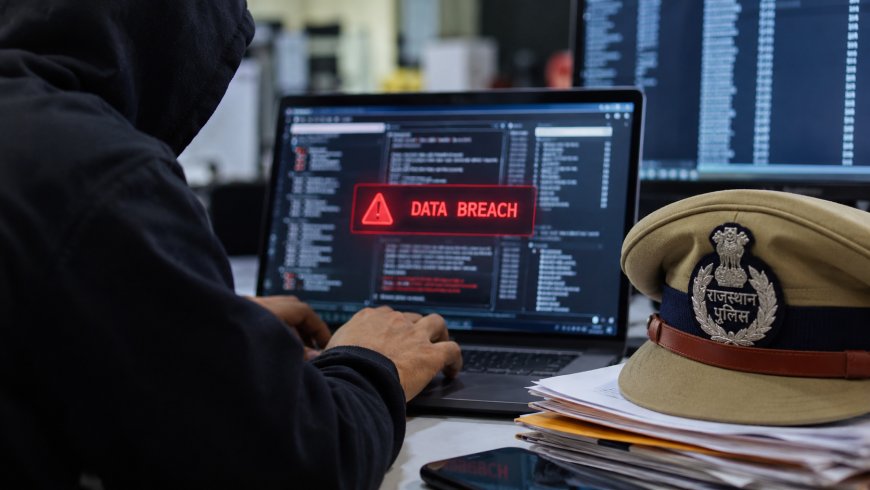
Rajasthan Police Data Breach: 70,000 Records Allegedly Exposed
Rajasthan Police faces a data breach investigation after hackers allegedly accessed identity records, mobile numbers, and 86.3 lakh emails. What does it mean for data security?
By Shefali Rana | BizGossips.in
The police are responsible for protecting citizens, but what happens when the security of police data itself comes under scrutiny? Rajasthan is facing serious cybersecurity questions after a hacker group allegedly claimed access to sensitive police and government-related information, including identity records, mobile numbers and millions of emails.
The reported figures are alarming. However, authorities have not independently confirmed the alleged breach or its full extent. That distinction is important: the claims warrant investigation, but the actual scale of the incident must be established through verified evidence.
What Does the Hacker Group Allegedly Claim?
According to media reports, a group identifying itself as Scarlett claims to have accessed 5,926 mailboxes containing approximately 86.3 lakh emails.
The group has also reportedly claimed possession of:
-
70,301 identity records
-
59,460 mobile numbers
-
More than 7.83 lakh unique email addresses
-
Copies of First Information Reports (FIRs) and Call Detail Records (CDRs)
The group has further claimed that information associated with Rajasthan’s Department of Information Technology and Communication (DoIT&C) is available for sale.
These figures remain unverified allegations. Investigators must establish whether the data is authentic, where it originated, whether it was obtained through unauthorised access and whether the records actually came from government systems.
Until those questions are answered, the reported numbers should not be treated as confirmed breach totals.
Password Changes and Device Updates: Are They Enough?
Media reports indicate that police personnel were instructed to change their official email passwords and update their laptops and mobile devices. The incident was also reportedly brought to the attention of the Indian Computer Emergency Response Team (CERT-In).
Such precautions can help limit further exposure if accounts or devices have been compromised. But immediate security measures are only one part of an effective response.
Investigators also need to determine whether credentials were stolen, whether unauthorised access is ongoing, which systems may be affected and whether additional security controls are required.
The broader concern is whether government institutions have sufficient safeguards in place before an incident occurs. Sensitive information requires continuous protection, including access controls, monitoring, secure device management and timely responses to suspicious activity.
Why Should Ordinary Citizens Be Concerned?
If the allegations are substantiated, exposed personal information could potentially be used for phishing, identity impersonation, targeted scams or other forms of cybercrime.
The alleged presence of police records makes the situation particularly sensitive. FIRs may contain details about complainants, witnesses or people named in investigations. Call Detail Records can reveal information about communications and contact patterns.
Unauthorised exposure of such records could therefore create risks beyond financial fraud, potentially affecting personal privacy and the confidentiality of sensitive cases.
However, the available reports do not establish how many individuals, if any, have been affected by a confirmed breach. Nor is there verified public evidence establishing that the allegedly exposed information has been misused.
That is why the investigation's findings will be crucial.
Accountability Cannot Stop at Changing Passwords
Changing passwords and updating devices are sensible precautionary steps, but they cannot replace a thorough investigation.
Authorities need to establish the source of the alleged exposure, secure any affected systems, assess potential harm and take corrective action where vulnerabilities are identified. If individuals are confirmed to be affected, clear and timely communication will also be important.
Public institutions handling sensitive information should be able to explain what happened, what evidence supports their findings and what measures are being taken to prevent a recurrence.
Transparency matters, but so does accuracy. Prematurely presenting unverified claims as established facts can create unnecessary alarm, while failing to communicate confirmed risks can leave citizens unprepared.
The BizGossips Take: Who Guards the Guardians?
The Rajasthan Police data breach allegations raise a question that extends beyond one state: how effectively are public institutions protecting the information entrusted to them?
Government databases can contain highly sensitive personal and administrative records. Protecting them must be an ongoing responsibility rather than a reaction triggered by public allegations.
If the claims prove genuine, citizens deserve clear answers about what was accessed, who may have been affected and what corrective measures will follow. If the allegations are inaccurate or exaggerated, the investigation should establish that as well.
The bottom line: The reported figures are serious, but they remain allegations until verified. The real test will be whether authorities establish the facts, address any confirmed security failures and demonstrate that citizens’ data is being protected.
Disclaimer: This article is based on reported allegations that have not been independently confirmed. The scope and authenticity of the alleged data exposure remain subject to investigation.
What's Your Reaction?
 Like
0
 Dislike
0
 Love
0
 Funny
0
 Angry
0
 Sad
0
 Wow
0