





































ISRO Gaganyaan Mission: Key Safety Test Completed
ISRO completes critical Crew Module–Service Module separation tests ahead of Gaganyaan’s first uncrewed mission targeted for 2026
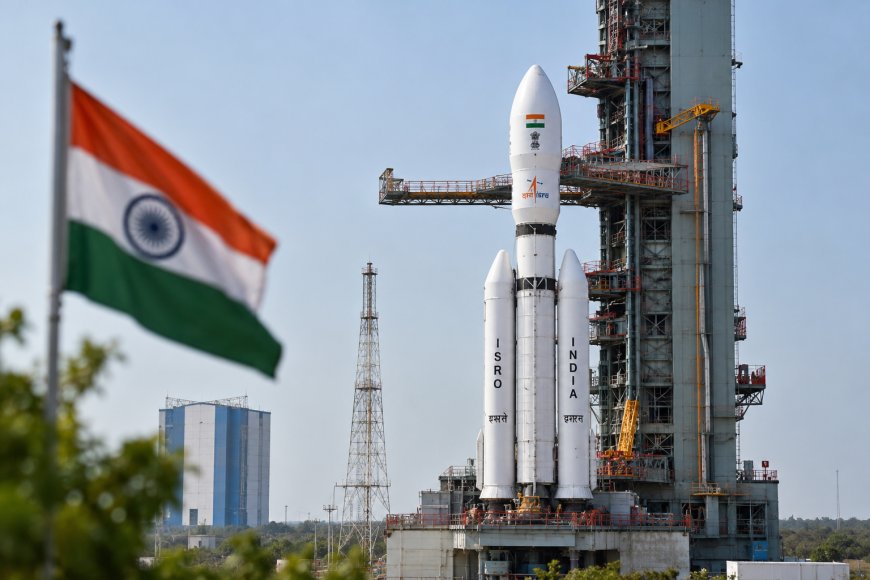
By Shefali Rana | BizGossips.in
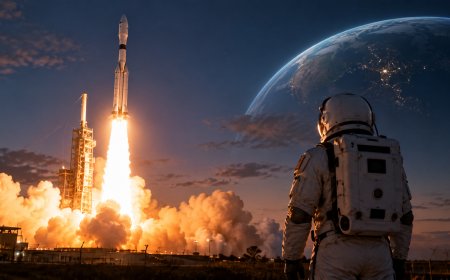
India’s human spaceflight ambitions have received another boost. The Indian Space Research Organisation (ISRO) has completed Crew Module–Service Module separation tests, marking another important step towards the first uncrewed Gaganyaan mission, targeted for 2026.
The achievement matters because spacecraft safety depends on much more than a successful rocket launch. But there is a bigger question: how close is India to sending astronauts into space, and how much testing remains before that ambition becomes reality?
What Has ISRO Actually Achieved?
According to ISRO’s announcement on October 16, the tests validated the separation system connecting two critical components of the Gaganyaan spacecraft: the Crew Module (CM) and the Service Module (SM).
The modules remain connected during launch and the orbital phase. Before the Crew Module returns to Earth, it must separate from the Service Module in a carefully controlled sequence involving pyrotechnic devices and systems designed to release the connections.
ISRO conducted the tests using a specially developed setup at the Vikram Sarabhai Space Centre in Thiruvananthapuram. The exercise simulated the separation process, including the cutting of multiple connections between the modules.
The tests also assessed whether critical Crew Module systems could withstand the associated shocks. These included avionics, inertial navigation, thermal protection, and temperature and humidity control systems.
In simple terms, ISRO was checking whether essential spacecraft systems could remain functional while the modules separate—a crucial requirement for a mission that will eventually carry astronauts.
Why This Safety Test Matters
Spaceflight involves several high-risk stages, and a successful launch is only one part of the challenge. The spacecraft must also operate reliably in orbit, execute its planned manoeuvres, and bring the crew module safely back to Earth.
If the separation system fails, the spacecraft could face serious complications during the return sequence. That makes this test more than a routine technical exercise: it helps validate a critical part of the mission’s safety architecture.
However, there is an important distinction between passing a ground test and proving a system under actual flight conditions. Ground testing provides valuable evidence, but it cannot independently establish that every component will perform as expected throughout a complete mission.
For a human spaceflight programme, reliability must be demonstrated across interconnected systems—not just one successful test.
Is the 2026 Mission Target Still Within Reach?
ISRO has targeted 2026 for Gaganyaan’s first uncrewed mission, known as G1. The latest test represents progress towards that milestone, but it does not confirm that the launch has occurred or that the programme is ready for a crewed flight.
The broader challenge is to validate the spacecraft, its safety systems and the operations needed to complete a mission successfully. Each milestone contributes to that process, while further testing helps identify and reduce risks before astronauts are placed on board.
India’s ambition to develop an indigenous human spaceflight capability is significant. It could strengthen the country’s position in the global space sector and expand its technological capabilities.
But public expectations need to remain grounded in what each milestone actually proves.
The Bigger Picture: Progress Without Premature Celebration
The real question is not whether ISRO deserves credit. It does. Successfully testing a critical separation system is a meaningful achievement.
The challenge is distinguishing technical progress from overall mission readiness. A successful test reduces uncertainty about a particular system; it does not eliminate every risk associated with human spaceflight.
As Gaganyaan moves forward, the most important indicators will be the successful completion of further tests, integrated mission demonstrations and the eventual performance of the spacecraft under real flight conditions.
The BizGossips Take
ISRO’s latest achievement is another positive step towards India’s human spaceflight ambitions. But the real milestone will be demonstrating that the complete mission can operate safely and reliably—not simply ticking off individual technical tests.
The bottom line: India is making progress towards Gaganyaan, but progress and readiness are not the same thing. In human spaceflight, rigorous testing is not a delay in achieving the goal; it is part of what makes the goal possible.
Disclaimer: This article is for informational purposes only. Mission schedules and technical milestones are subject to official updates from ISRO.
What's Your Reaction?
 Like
0
 Dislike
0
 Love
0
 Funny
0
 Angry
0
 Sad
0
 Wow
0