





































Samsung’s $80 Billion AI Profit Boom: Record Earnings Explained
Samsung expects a record $80 billion quarterly operating profit as AI chip demand surges, but investors are questioning how long the boom can last.
By Shefali Rana | BizGossips.in
Samsung Electronics has just delivered the kind of profit number that sounds almost unreal — 107.4 trillion Korean won, or around $80 billion, in third-quarter operating profit.
Yet investors did not exactly celebrate.
Samsung expects its operating profit for the July-September quarter to surge nearly ninefold from 12.17 trillion won a year earlier. Revenue is estimated at around 195 trillion won, up 126.6% year-on-year.
If confirmed, it would mark an extraordinary milestone for a technology company.
But markets are already asking a more uncomfortable question: How long can this AI-fuelled profit boom last?
AI Is Paying Samsung — Big Time
The answer starts with memory chips.
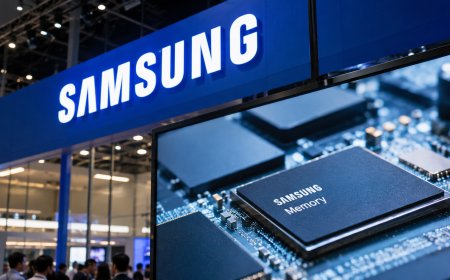
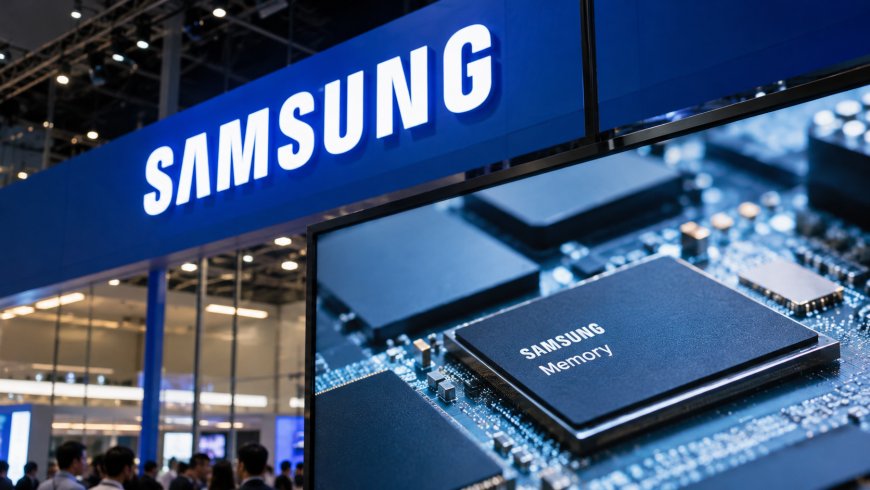
Samsung is one of the world's largest memory-chip manufacturers, alongside SK Hynix and Micron. The global AI data-centre boom has created enormous demand for advanced memory, particularly high-bandwidth memory (HBM) used in AI computing systems.
As AI companies and cloud providers race to build more computing capacity, demand for memory chips has surged. Tight supply and higher chip prices have provided a powerful earnings boost for Samsung's semiconductor business.
The scale of the turnaround is striking.
Samsung's estimated third-quarter operating profit of 107.4 trillion won compares with 89.49 trillion won in the second quarter of 2026 and just 12.17 trillion won in the third quarter of 2025.
That would put Samsung on track for its fourth consecutive quarter of record operating profit.
But AI Isn't A Free Lunch
The AI boom is not benefiting every part of Samsung equally.
Its semiconductor division is riding the wave, but other businesses are dealing with the consequences of higher component costs.
Samsung's smartphone and consumer-electronics operations rely heavily on memory and other components. When chip prices rise sharply, the same semiconductor boom that benefits Samsung's chip business can increase costs elsewhere within the company.
Reuters reported that analysts expect Samsung's mobile business to post a loss of more than $1 billion in the third quarter. Its contract chipmaking business is also expected to remain loss-making.
That creates a strange corporate equation:
AI demand is making Samsung's chip business enormously profitable — while making some of its other businesses more expensive to operate.
Why Aren't Investors Celebrating?
Because markets rarely price companies based only on what they earned yesterday.
Samsung's shares slipped despite the blockbuster profit guidance, reflecting concerns about the sustainability of the current memory-chip cycle.
Analysts expect profit growth to slow in the fourth quarter, while the pace of memory-price increases could also moderate.
That distinction matters.
A company can report record earnings and still see its stock struggle if investors believe the peak has already arrived.
In other words, record profit does not automatically mean a record investment opportunity.
The Bigger Question: Is This Another Chip Cycle?
The semiconductor industry has always been cyclical.
When demand rises faster than supply, prices jump and chipmakers enjoy huge profits. That encourages manufacturers to expand capacity. Eventually, supply catches up, pricing pressure returns and margins begin to fall.
AI could make this cycle different because demand for computing power is expanding rapidly.
But it does not eliminate the underlying economic reality.
The market is therefore looking beyond Samsung's spectacular third-quarter number and asking whether AI demand can remain strong enough to support today's elevated memory prices.
Samsung Still Has Something To Prove
The company's preliminary numbers are undeniably impressive.
But Samsung's challenge is no longer simply generating profits. It is turning extraordinary AI-driven earnings into sustainable long-term growth.
That means strengthening its position in advanced memory, improving its contract-chipmaking business and protecting margins across smartphones and consumer electronics.
Samsung is expected to release its detailed third-quarter results, including performance by business division, on October 29.
Until then, the headline is simple: AI has turned Samsung into a profit machine.
The bigger story, however, may be whether investors believe that machine can keep running at full speed.
Disclaimer: This article is based on Samsung Electronics' official earnings guidance and reporting from the Financial Times, Reuters and BBC. The third-quarter figures discussed are preliminary estimates, and Samsung's detailed results are expected on October 29. This article is for informational purposes only and should not be considered investment advice.
What's Your Reaction?
 Like
0
 Dislike
0
 Love
0
 Funny
0
 Angry
0
 Sad
0
 Wow
0