





































Sensex, Nifty Rebound After 8-Week Fall: Real Turnaround or Relief Rally?
Sensex jumps 413 points and Nifty gains 131 points as crude oil cools and Fed rate hike fears ease. But is this a real market recovery or just a relief rally?
By Shefali Rana | BizGossips.in
After eight consecutive weeks of losses, India's stock market finally has something to celebrate.
But before investors start calling it a comeback, one question deserves attention: is this the beginning of a genuine turnaround, or simply a relief rally after weeks of selling?
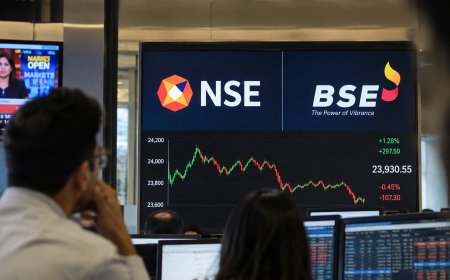
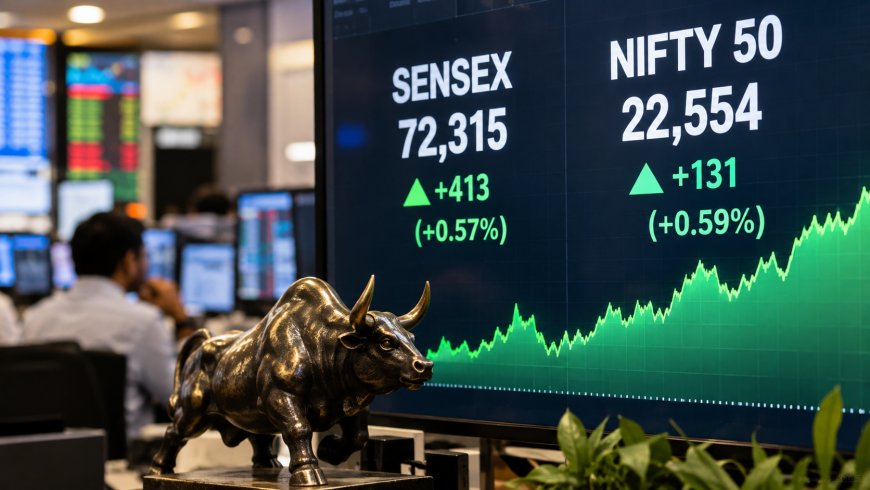
The Sensex jumped 413 points to 72,315 in early trade on Monday, while the Nifty gained 131.55 points to 22,554.20.
The momentum strengthened later in the session. The Sensex climbed as much as 705.70 points to 72,594.57, while the Nifty crossed 22,600, gaining 187.30 points to 22,605.10.
The rebound is notable. But the market still has plenty to prove.
Eight Weeks of Losses Came Before This Rally
The latest recovery follows one of the toughest stretches for Indian equities in recent weeks.
The Nifty 50 and Sensex had recorded their eighth consecutive weekly decline, with investors dealing with heavy foreign selling, elevated crude prices and rising global bond yields.
That makes Monday's gains significant from a sentiment perspective.
But it also means investors need to be careful about interpreting one strong session as evidence that the broader trend has completely changed.
A market that has fallen for eight straight weeks can produce sharp rebounds even when the underlying trend remains uncertain.
Crude Oil Finally Gives India Some Breathing Room
One of the biggest positives for Indian markets has been the recent decline in crude oil prices.
Brent crude slipped toward $101.5–$101.90 per barrel, providing some relief to an economy that remains heavily exposed to imported energy.
The decline followed increased crude exports from the Middle East and the G7 decision to release 100 million barrels of crude and diesel from emergency reserves.
Lower oil prices can help reduce pressure on India's import bill, inflation and corporate input costs.
But there is a catch.
Crude remains significantly above levels that would be considered comfortable for an oil-importing economy.
So, while falling oil is good news for India, one or two sessions of lower crude prices do not eliminate the underlying risk.
Fed Rate-Hike Fears Are Cooling
Global monetary policy is another reason investors are breathing easier.
Softer-than-expected US employment data reduced expectations of another Federal Reserve rate hike this month.
According to CME FedWatch data cited in market coverage, the probability of a Fed hike had fallen to 22% from 64% a week earlier.
Asian markets responded positively, with Japan's Nikkei gaining more than 2%.
For emerging markets such as India, a less aggressive US rate outlook can potentially improve global liquidity conditions and reduce some pressure from rising US yields.
But that does not mean global risks have disappeared.
US Treasury yields remain elevated, geopolitical uncertainty continues, and foreign investors have not suddenly reversed their selling strategy.
IT Stocks Get a Boost, HDFC Bank Adds Support
The technology sector also received a positive signal after Accenture reported stronger-than-expected results and outlook.
That provided a favourable read-through for Indian IT companies, with stocks such as Infosys and Wipro benefiting from the improved sentiment around global technology spending.
Meanwhile, HDFC Bank gained attention following the appointment of Anup Bagchi as its new CEO for a three-year term.
Bagchi becomes the first external candidate to lead India's largest private-sector bank, making the appointment an important development for investors watching the lender's next phase.
The Reality Check: Bulls Still Have Work to Do
The biggest reason for caution is simple: the market's recent history has not suddenly disappeared.
Foreign investors sold equities worth ₹9,484.22 crore on Thursday, while domestic equities had already endured eight consecutive weeks of losses.
Technical levels also suggest that the recovery needs confirmation.
The 22,750–22,850 zone remains an important resistance area for the Nifty, while a sustained move above 23,050 could provide a stronger signal that the short-term market structure is improving.
Until then, investors may be looking at a relief rally rather than a confirmed trend reversal.
Relief Rally or Real Turnaround?
Monday's rebound is certainly encouraging.
Lower crude prices, easing Fed-hike expectations, positive global cues, and strength in major stocks have given the bulls some breathing room.
But the bigger question is whether these factors can remain supportive long enough to reverse the broader trend.
One strong session can change sentiment. It cannot erase eight weeks of losses.
For now, the bulls are back in the game.
But they still have to prove that this is more than just a temporary bounce.
Disclaimer: This article is for informational and editorial purposes only and does not constitute investment, financial, or trading advice. Market conditions can change rapidly. Investors should conduct their own research, consider their risk tolerance, and consult a qualified financial adviser before making investment decisions.
What's Your Reaction?
 Like
0
 Dislike
0
 Love
0
 Funny
0
 Angry
0
 Sad
0
 Wow
0