



















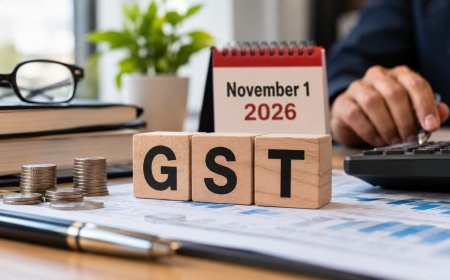






















GST Rules from November 1, 2026: Relief for Small Businesses?
New GST rules from November 1 aim to simplify registration for eligible small traders and e-commerce sellers. Will the reforms deliver real relief?

By Shefali Rana | BizGossips.in
India’s GST system is preparing for another round of changes aimed at reducing compliance hurdles for small businesses and e-commerce sellers. From November 1, 2026, new provisions will allow eligible online sellers to register in states where they do not have a physical business location by declaring an e-commerce operator’s warehouse as their principal place of business.
The change could make interstate expansion easier for smaller traders. But there is a bigger question: Will the new GST rules genuinely simplify doing business, or will sellers still face hurdles when navigating registrations, documentation and platform approvals?
The Central Goods and Services Tax (CGST) Amendment Rules, 2026, notified on October 26, introduce the new registration mechanism alongside other procedural changes.
E-Commerce Sellers Get a New Opportunity
Under the new Rule 14B, eligible sellers registered in their home state can apply for GST registration in another state without maintaining their own physical business premises there. They can declare a participating e-commerce operator’s warehouse as their principal place of business, subject to the prescribed conditions.
However, this is not an automatic facility for every online seller.
The scheme applies to eligible suppliers selling goods through e-commerce operators required to collect tax at source under GST. Sellers must meet the prescribed monthly output tax liability limit of ₹2.5 lakh on specified supplies to registered buyers, excluding buyers registered under the same PAN. The e-commerce operator must also consent to the use of its warehouse address.
Applications must be submitted through Form GST REG-01. The platform has seven working days to communicate its consent. If consent is not provided within that period, the application will not proceed further.
Biometric Aadhaar authentication and verification of documents and the seller’s physical business premises in the home state are also required where applicable.
For small traders looking to sell across India, this could reduce the need to establish separate business premises in every state. But platform approval remains a dependency, and sellers must still meet the scheme’s eligibility requirements.
Less Paperwork, More Relief?
The e-commerce registration provision is part of a broader effort to simplify GST administration.
The GST Council has recommended changes involving registration applications, amendments, cancellation procedures, refunds and tax notices. These measures aim to improve clarity, reduce unnecessary interactions with tax officials and make compliance more predictable for businesses.
For small enterprises, even modest procedural improvements can matter. Repeated documentation requests, unclear application requirements and delays can consume time and resources that businesses would rather spend on sales, inventory and customer service.
However, simplified procedures do not eliminate a business’s tax obligations. Sellers must still maintain proper records, file applicable returns and comply with the conditions attached to their registrations.
The real test will be whether these changes reduce the time, cost and uncertainty involved in routine compliance.
GST Collection Tells Another Story
While the government is working to simplify compliance, tax collection figures offer another perspective on the economy.
According to published reports, gross GST collections in August 2026 rose 14.8% year on year to approximately ₹1.99 lakh crore. Net GST revenue, after refunds, increased 8.3% to around ₹1.68 lakh crore.
Import-related GST revenue climbed 29% to ₹62,604 crore, while domestic GST revenue increased 9.3% to approximately ₹1.37 lakh crore. Total refunds rose sharply to ₹31,795 crore.
These figures show that tax receipts continued to grow, but they do not automatically mean every business sector is expanding at the same pace or facing fewer financial pressures.
Import activity, domestic transactions and refunds all influence the final numbers. Higher collections should therefore be viewed alongside the actual compliance costs and working-capital requirements businesses face.
A tax system can collect more revenue and still need to become easier for smaller taxpayers to navigate.
Who Benefits—and What Should Sellers Check?
The new e-commerce registration mechanism could be particularly useful for small sellers who want to reach customers in other states without setting up their own premises there.
Before applying, businesses should confirm:
-
Whether they meet the scheme’s eligibility and monthly tax liability conditions.
-
Whether their sales will be made exclusively through eligible e-commerce platforms under this registration.
-
Whether the platform has agreed to let them declare its warehouse as a place of business.
-
Whether home-state authentication, physical verification, and documentation requirements have been completed.
-
Whether they understand the record-keeping and ongoing compliance obligations.
These conditions matter because the simplified mechanism is optional and does not remove all GST requirements.
The BizGossips Take
The November 1 changes could make interstate e-commerce expansion more accessible for eligible small traders. Allowing sellers to use an e-commerce operator’s warehouse as their registered business location may reduce the need for costly physical expansion.
But the benefit will depend on implementation. If sellers encounter delays in platform approval, confusion over eligibility or difficulties completing verification, the practical relief may be smaller than expected.
The bottom line: GST reform should be measured not only by the rules announced, but by the difference businesses experience on the ground. If the new mechanism reduces unnecessary paperwork and makes interstate selling easier, it could be a meaningful step towards improving India’s business environment.
Disclaimer: This article is for informational purposes only and is based on published reports and government materials. GST eligibility and compliance requirements depend on the applicable rules and individual circumstances. Businesses should consult official GST notifications or a qualified tax professional before applying.
What's Your Reaction?
 Like
0
 Dislike
0
 Love
0
 Funny
0
 Angry
0
 Sad
0
 Wow
0