




































Sterlite Technologies Targets ₹20,000 Crore Revenue by FY29: Growth Story or Big Bet?
Sterlite Technologies targets ₹20,000 crore revenue by FY29 under its Lakshya roadmap. Here’s what is driving the growth, AI opportunity and risks.
By Shefali Rana | BizGossips.in
Sterlite Technologies Ltd (STL) is aiming for a dramatically bigger future — and the stock market has already taken notice.
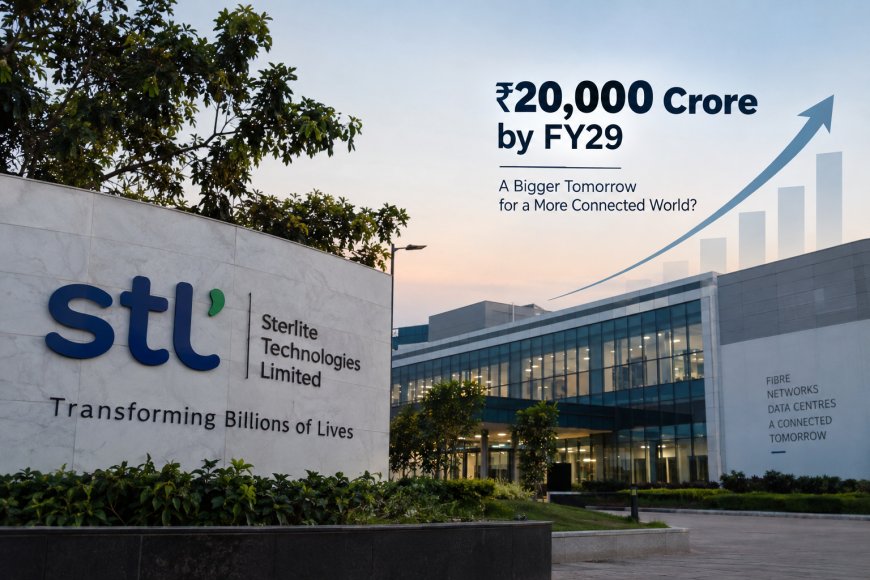
The optical connectivity company has unveiled its “Lakshya” growth roadmap, targeting ₹20,000 crore in revenue by FY29.
That is an ambitious target, especially when STL reported ₹4,745 crore in revenue in FY26. In simple terms, the company wants to more than quadruple revenue within three years.
₹4,745 Crore to ₹20,000 Crore: How Big Is the Bet?
Under Lakshya, STL plans to invest around ₹1,000 crore annually over the next three financial years, with a major focus on increasing fibre and cable manufacturing capacity by around 50%.
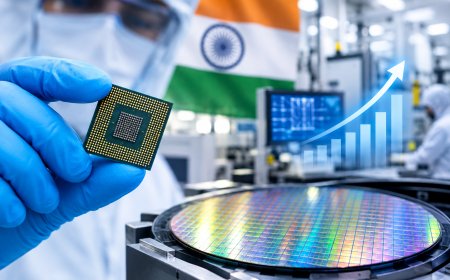
The company is also betting on a changing demand environment. Instead of relying primarily on traditional telecom infrastructure, STL expects growth from AI data centres, cloud infrastructure, inside-data-centre networks and data-centre interconnects.
As AI infrastructure expands, the need for high-speed optical connectivity is also expected to increase.
Why Is the Market Excited?
STL has some strong numbers supporting its growth story.
Its order book stood at around ₹18,600 crore in Q1 FY27, supported partly by a large US hyperscaler order. The company has also highlighted an open order book exceeding $2 billion.
It recently secured a long-term contract worth approximately $288 million with a leading hyperscaler for high-density optical fibre cable products, with supplies scheduled between CY2027 and CY2029.
The latest quarterly numbers were also strong. Consolidated revenue from operations rose 87.4% year-on-year to ₹1,910 crore, while consolidated net profit jumped to ₹197 crore from ₹10 crore.
The market reacted positively, with STL shares hitting a 5% upper circuit after the growth roadmap announcement.
But one question remains: Can STL sustain this growth for three years?
The Margin Target Is Another Big Challenge
Revenue isn't the only ambitious target.
STL aims for an EBITDA margin above 27% by FY29, compared with 13.2% in FY26.
That means the company is targeting both massive revenue growth and more than a doubling of its operating margin.
If achieved, the combination could create significant value. But it also raises the execution risk.
STL will need to expand capacity, fulfil its order book, manage capital expenditure and maintain pricing power while improving profitability.
AI Data Centres: The Potential Game Changer
STL's biggest opportunity could be the AI infrastructure boom.
Companies investing heavily in AI need not only GPUs and data centres but also the optical networks connecting servers, facilities and cloud infrastructure.
STL is positioning itself directly in this connectivity chain.
However, AI spending is an opportunity, not a guaranteed revenue stream. STL still needs to win contracts, manufacture efficiently and deliver competitively.
₹20,000 Crore Is a Target, Not a Result
This distinction matters.
The ₹20,000-crore figure is a management target, not guaranteed future revenue. The company's order book and long-term contracts provide visibility, but they do not eliminate execution risks.
Potential challenges include slower recovery in the US optical market, raw-material shortages, higher capital expenditure, pricing pressure, and weaker-than-expected AI infrastructure spending.
Investors should therefore separate order visibility from guaranteed future earnings.
What Investors Should Watch
The next few quarters will be crucial. Key factors include:
-
Revenue growth and order-book conversion
-
Manufacturing capacity expansion
-
EBITDA margin progression
-
Capital expenditure and cash generation
-
US and global optical demand
-
Actual contribution from AI and data-centre customers
BizGossips Take
STL's Lakshya roadmap is certainly ambitious. Going from ₹4,745 crore in FY26 revenue to ₹20,000 crore by FY29 would represent a dramatic transformation.
The company has credible building blocks — a large order book, hyperscaler contracts, strong recent quarterly growth, and exposure to AI and data-centre infrastructure.
But the target is far from guaranteed.
STL isn't just betting on higher revenue. It's betting on higher revenue and much higher margins at the same time.
The market has already shown enthusiasm. Now comes the harder part: execution.
If STL can convert AI and data-centre demand into sustained growth while improving margins and cash generation, Lakshya could become a genuine transformation story.
If reaching ₹20,000 crore requires disproportionately higher investment without comparable profitability, the target could start looking less like a roadmap and more like a very expensive bet.
The real question isn't whether ₹20,000 crore sounds possible. It's whether the economics of reaching ₹20,000 crore make sense.
Disclaimer
This article is for informational and editorial purposes only and should not be considered investment, financial, or stock-market advice. Revenue, margin and business targets discussed are management objectives and are not guarantees of future performance. Readers should conduct their own research and consult a qualified financial adviser before making investment decisions.
What's Your Reaction?
 Like
0
 Dislike
0
 Love
0
 Funny
0
 Angry
0
 Sad
0
 Wow
0