




































Crude Oil Shock Sends Sensex, Nifty Lower: Is India’s Market Fragile?
Indian stocks fell as surging crude oil and West Asia tensions hit sentiment. Here’s why expensive oil could pose a bigger risk to the Indian market.
By Shefali Rana | BizGossips.in
The Indian stock market has received another uncomfortable reminder: when crude oil rises sharply, market confidence can disappear quickly.
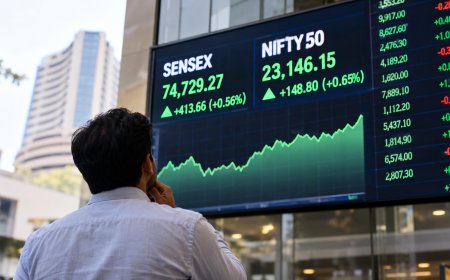
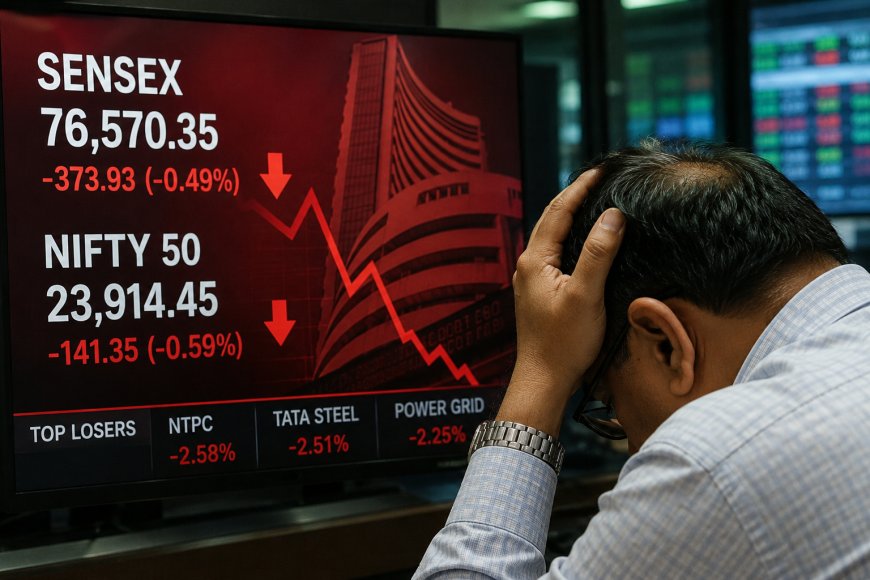
On Wednesday, September 2, Indian equities came under pressure as escalating tensions in West Asia pushed crude prices higher. The Sensex fell 373.93 points, or 0.49%, to 76,570.35, while the Nifty declined 141.35 points, or 0.59%, to 23,914.45.
But the bigger question is not just why the market fell. It is why rising crude continues to remain such a major pressure point for India.
Crude Oil: India’s Uncomfortable Weak Spot
Brent crude climbed to around $95.4 per barrel, after touching a near six-week high, while WTI moved above $90.
The latest escalation in the US-Iran conflict raised concerns about energy supplies from the region. For India, which relies heavily on imported crude, a prolonged oil rally can increase the import bill, add inflationary pressure and squeeze businesses facing higher energy and transportation costs.
And this is where India's market strength starts looking slightly less comfortable.
Fear Today, Fundamentals Tomorrow?
The immediate market reaction was driven by fear, but expensive oil can eventually become a fundamental problem.
Global bond yields were already elevated, while concerns over US interest rates added pressure to emerging markets. Global equities were also weak, with South Korea's Kospi falling more than 3% and Japan's Nikkei nearly 3%.
So, India's decline was not happening in isolation.
Still, it raises an uncomfortable question: if global shocks can quickly hit Indian markets through crude, interest rates and foreign flows, how much of the market's strength is actually under India's control?
Not Everyone Was Selling
The market decline was broad, but some stocks bucked the trend.
HyTech Engineers, Tribhovandas Bhimji Zaveri and Steel Strips Wheels were among the stocks that gained, while oil-sensitive sectors such as oil marketing companies, tyre makers, paints and airlines faced pressure.
Interestingly, Coal India gained 3.6%, supported by its announcement that total coal supplies increased 5.5% in August.
This divergence shows that investors were not simply exiting everything. They were beginning to distinguish between businesses that can withstand higher commodity prices and those directly exposed to expensive oil.
The Bigger Risk Is Not One Red Day
The India VIX rose more than 5% to 11.76, showing increased uncertainty, although this alone does not signal a market crash.
The real concern is what happens if crude remains above $90 for a prolonged period.
One temporary spike may be manageable. Sustained expensive oil could affect inflation, corporate margins, transportation costs and India's import bill, forcing investors to reassess earnings expectations.
The Bottom Line
The September 2 sell-off was more than just another red session. It highlighted a vulnerability that India cannot completely escape: geopolitics can turn into an oil problem, and an oil problem can quickly become a market problem.
India may have a strong domestic growth story, but that does not make it immune to imported energy shocks.
The real test now is simple: does crude cool down, or are investors heading into a longer period of expensive oil?
Because if oil stays near these levels, the question may no longer be “Will the market recover?” but “How expensive will that recovery be?”
Disclaimer: This article is for informational and educational purposes only and should not be considered investment advice. Readers should conduct their own research and consult a SEBI-registered financial adviser before making investment decisions.
What's Your Reaction?
 Like
0
 Dislike
0
 Love
0
 Funny
0
 Angry
0
 Sad
0
 Wow
0